
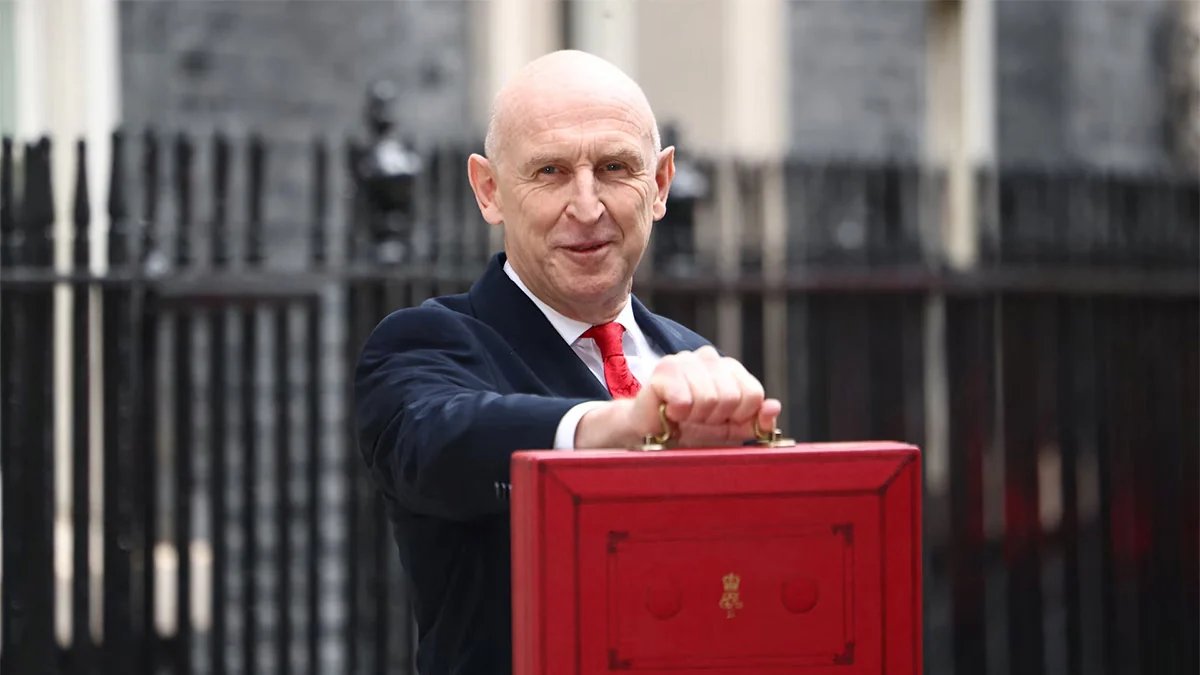
LONDON, Oct 29: British finance minister John Healey said the government would reduce spending on welfare benefits as he sought to address one of the big public spending challenges that remain after his first budget announcement.
“We have to bring the benefits bill down. You don’t do that by crude cuts,” he said in an interview with the BBC.
Speaking later to reporters, Prime Minister Andy Burnham said the government was “working flat out” to get the welfare bill down as quickly as possible.
Healey’s tax and spending plans offered some short-term support for households hit by the surge in energy prices caused by the US-Iran war, financed partly by higher taxes on banks, savers and landlords.
But the budget did not address long-term questions such as how to raise defence spending to 3% of economic output, offset inflation’s impact on public spending and tackle the growing welfare bill, which includes pensions as well as support for people deemed too ill to work.
Spending on welfare is set to cost more than 11% of economic output this year.
The opposition Conservative Party and some bond investors say that reveals a lack of will in Burnham’s Labour Party to lower borrowing.
However, markets reacted broadly favourably to Healey’s budget and 10-year government borrowing costs touched a one-month low on Thursday.
TACKLING YOUTH JOBLESSNESS
Healey focused on the problem of unemployment among young people.
“This system is unsustainable,” he said. “I feel a moral duty to deal with these youngsters (who) have been written off.”
Healey said the government would help young people out of work who would be required to take opportunities on offer.
Eduin Latimer, senior research economist at the Institute for Fiscal Studies think tank, said that approach might save money “but it’s much more uncertain than just directly cutting entitlements or eligibility and it’s likely to give you savings over a longer timeframe, if you do deliver savings.”
A government review into young people out of employment, education or vocational training and another into the disability benefits system are due to be published next month.
Healey drew criticism from the left-leaning Resolution Foundation think tank for spreading too thinly his flagship spending measure – a £100 ($133) reduction in energy bills for 20 million households to offset some of the sharp increase in bills caused by the US-Iran conflict.
“Even those families receiving help (will be) facing higher energy bills than they did during the last energy price shock,” its chief executive Ruth Curtice said.
Typical energy bills this financial year are set to rise to £1,750 a year after government support, 4% higher than after Russia’s 2022 invasion of Ukraine, the think tank said.