
The Commerce Minister of Pakistan, Jam Kamal Khan has called for stronger economic ties with Bangladesh, urging both countries to expand bilateral trade, investment and industrial cooperation amid growing global economic uncertainty.
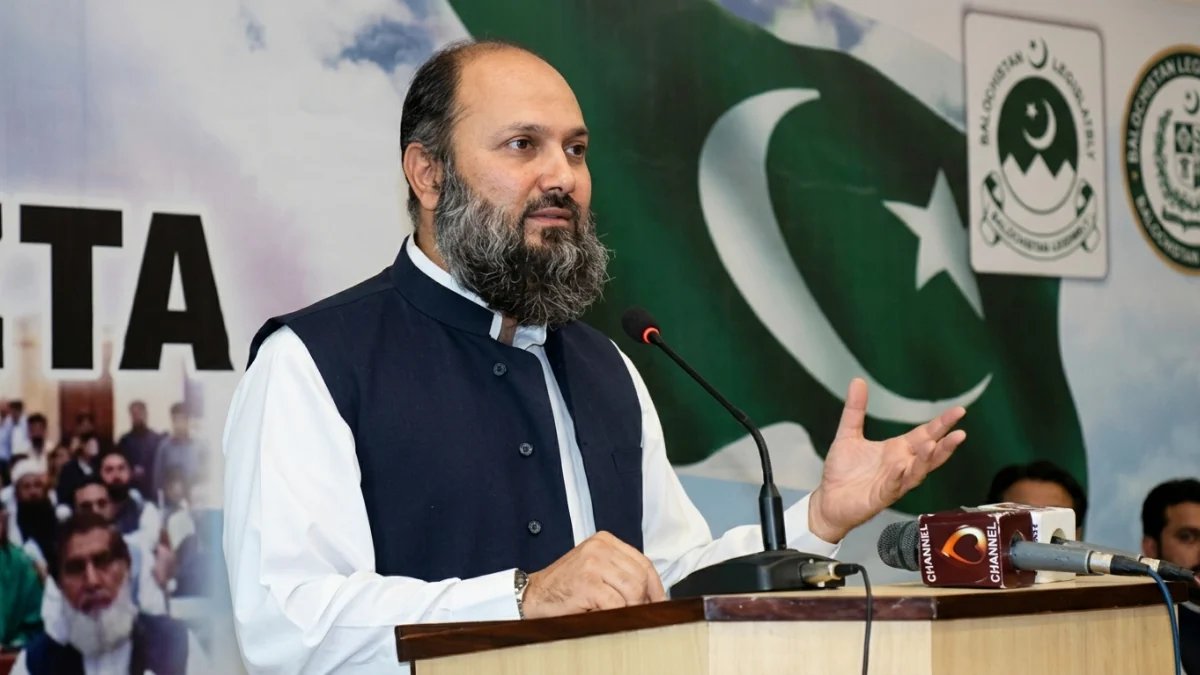
Speaking to a delegation of senior Bangladeshi civil servants attending an Executive Leadership Training Program in Islamabad, Jam Kamal Khan said closer strategic partnerships could help the two countries address emerging economic challenges and explore new business opportunities.
Pakistani government officials and senior bureaucrats also attended the meeting, where participants discussed trade policies, economic reforms and prospects for bilateral cooperation.
Recalling his recent visit to Bangladesh, federal commerce minister praised the country’s industrial progress, particularly in manufacturing, ship recycling and maritime industries.
He highlighted opportunities for collaboration in port development, logistics, industrial management and technology transfer.
Jam Kamal Khan said rising energy costs, geopolitical tensions, tariff uncertainties and global supply-chain disruptions had increased economic vulnerabilities, particularly for developing countries. He stressed the importance of economic diversification, technological advancement and stronger regional partnerships.
Highlighting the growing significance of artificial intelligence and emerging technologies, he urged policymakers to adopt forward-looking strategies to improve competitiveness and capitalize on new economic opportunities.
The Minister said Pakistan and Bangladesh could complement each other’s industrial strengths and jointly explore emerging markets, particularly Africa. While acknowledging competition in sectors such as textiles, he emphasized the potential for cooperation in manufacturing, agriculture, logistics and value-added industries.
During the interactive session, Bangladeshi participants raised issues relating to tariff and non-tariff barriers, pharmaceutical certification, banking arrangements, export competitiveness, anti-dumping measures and investment facilitation.
The possibility of a Preferential Trade Agreement (PTA), Free Trade Agreement (FTA) or another mutually beneficial trade arrangement was also discussed. The Minister highlighted the role of the existing Joint Working Group on Trade and the importance of feasibility studies to identify potential sectors and products for enhanced bilateral commerce.
Briefing participants on Pakistan’s trade reforms, Jam Kamal Khan outlined the government’s five-year tariff rationalization framework aimed at reducing customs duties, lowering production costs, improving industrial competitiveness and attracting investment.
He also highlighted initiatives to strengthen small and medium enterprises, modernize agriculture, enhance technical skills and improve compliance with international standards.
The Minister stressed the need for closer people-to-people, business-to-business and government-to-government engagement, including reciprocal visits by officials, technical experts and business delegations.
Expressing appreciation for the visiting Bangladeshi delegation and participating Pakistani officials, Jam Kamal Khan hoped the engagement would pave the way for sustained institutional exchanges and practical economic cooperation.
He reaffirmed Pakistan’s commitment to building a mutually beneficial partnership with Bangladesh that would create new opportunities for businesses and future generations.