
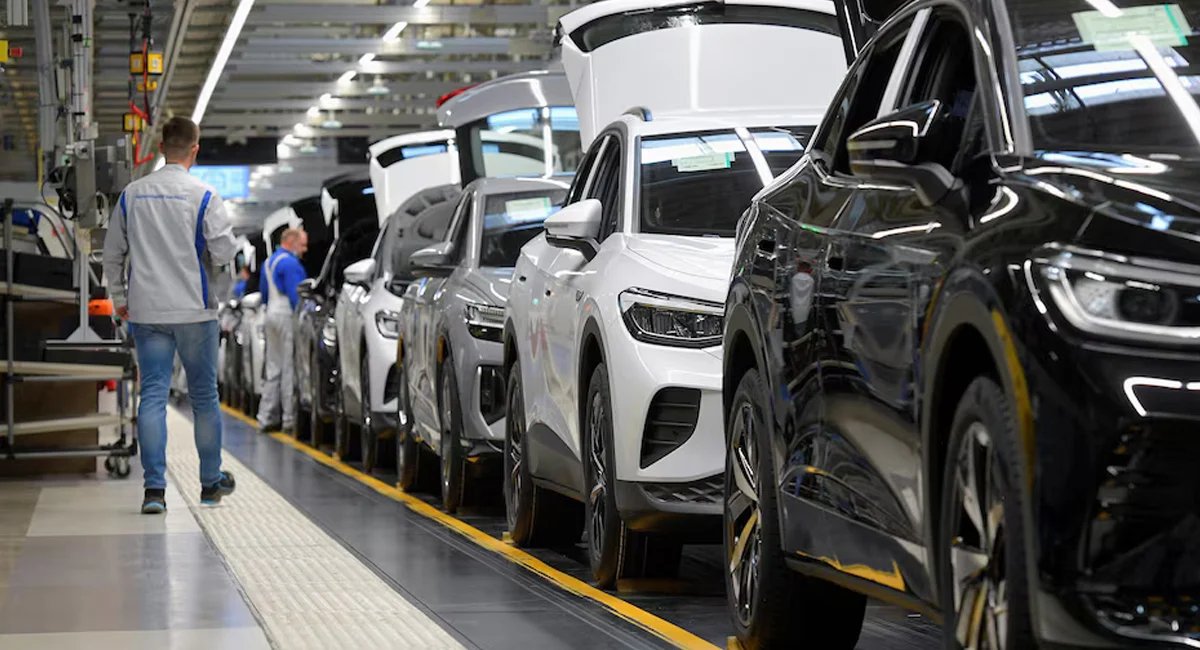
German auto group Volkswagen will recall around 4 million vehicles across four brands in the biggest such action since the Dieselgate scandal, the Handelsblatt newspaper reported on Friday.
Some 2.16 million VW models and 700,000 Audi models are to be recalled, according to Germany’s KBA road traffic authority.
Seat confirmed the number. Skoda had no immediate comment on the report.
In an earlier statement, Volkswagen said customers had been asked to take their vehicles for repair because of the risk of corrosion involving a screw in the steering system. If unchecked, this could compromise the steering’s function in the long term.
The company stressed that the recall was a precautionary measure and said the replacement of the screw would take no longer than an hour.
Volkswagen declined to comment on the estimated cost of the recalls.
About the firm
Volkswagen has been in business almost 90 years, and if you’ve ever seen a Volkswagen Beetle road tripping down the highway or a Golf in the grocery store parking lot, then you’ve seen the company’s work. It was created back in 1937 in Germany with a simple idea in mind: Make a car that the average person can actually afford to buy. That first “people’s car” became the Bug and eventually became one of the most iconic shapes in the world. While VW has expanded well beyond that one small car, that practical still-a-car-for-everybody persona has stuck.
What really marked out VW was just how broad it became. In the 70s, they replaced the Beetle with cars that felt contemporary and were still practical – the Golf, Passat. And then the Jetta, Tiguan and a raft of SUVs. They also bought other companies along the way, such as Bugatti, Lamborghini and Bentley, which are now part of the VW Group, along with Audi, SEAT, koda and a few others. But, under the VW badge, they still kept those links to cheap, straightforward engineering, and keeping interiors and tech simple and easy to work. They may not be the flashiest or latest, but they work for road trips, family life, or just for the commute.
Volkswagen has been hitting the accelerator on EVs lately. The ID.3, ID.4 and ID. Buzz are their main play on the future, and while they’re drastically different from the gas-powered vehicles they’re based on, they still retain that same practical DNA. VW is pouring billions into transforming its factories and meeting emissions targets, mostly across China and Europe – where EV sales are booming. Despite all the upheavals and a few scandals along the way, VW remains one of the largest car manufacturers in the world. It started as a car “for the people,” and in many ways, that’s still what it is.