
A new scientific study shows that weaker mountain rocks erode three times faster than harder ones. This quick breakdown is changing how experts think about natural carbon dioxide emissions. Researchers at the University of Massachusetts Amherst found that these fragile landscapes release much more greenhouse gas into the air than previously thought.
To understand this geological process, scientists needed a breakthrough in measuring ancient materials. They usually study cosmic rays from exploded stars that constantly hit the Earth. When these high-energy particles reach the ground, they create a rare isotope called beryllium-10 inside quartz crystals.
For decades, geologists have measured this isotope in large granite grains. Until now, finding it in fine-grained sedimentary rocks like shale was thought to be impossible.
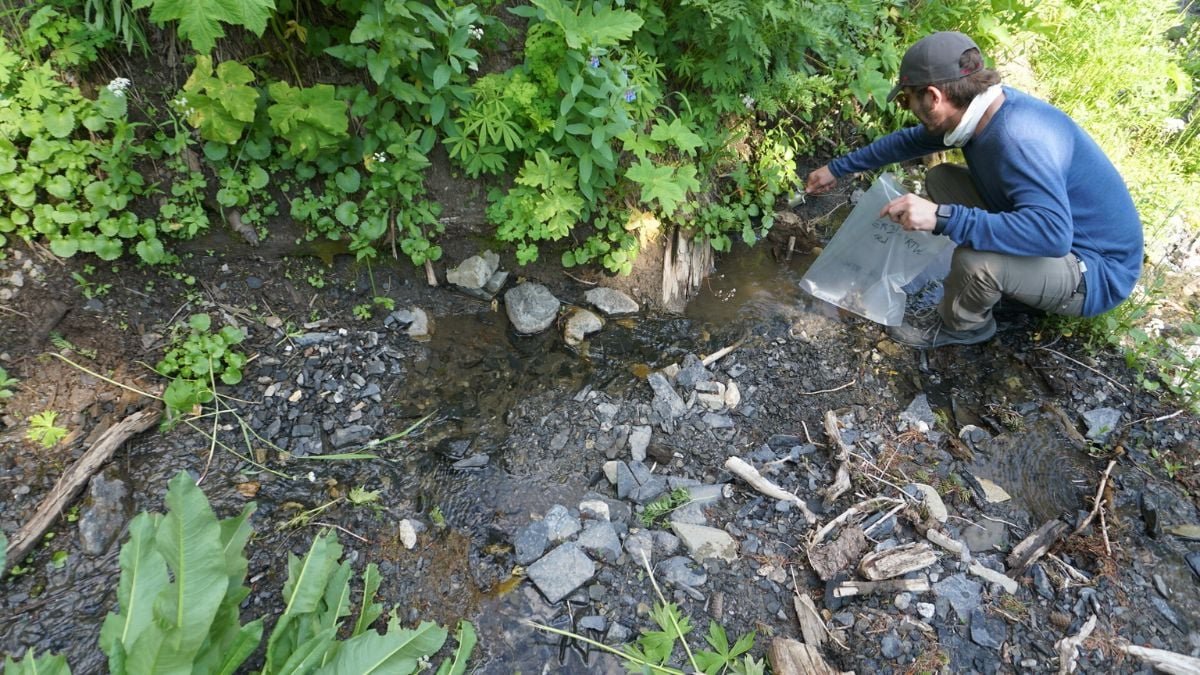
Postdoctoral researcher Eyal Marder and his team developed a new way to extract these tiny grains. They tested their method across Colorado’s varied alpine landscape, focusing on a large watershed near the well-known Crested Butte ski area. The team collected sediment samples from rivers that cut through a region with both tough igneous rock and fragile shale.
The field results challenged existing geological models. Marder found that shale erodes very quickly, even on gentle slopes. Shale’s erodibility was three times higher than that of the harder peaks nearby. This shows that the biggest landscape changes happen in the lowest and softest parts of a mountain range, not on the steepest cliffs.
This discovery reveals a major gap in current global climate models. Hard intrusive rocks slowly absorb carbon dioxide from the air. In contrast, weaker sedimentary rocks like shale release trapped greenhouse gases back into the atmosphere as they break down.
Because shale breaks down so quickly, scientists have greatly underestimated the natural carbon footprint of mountain regions around the world. Using this measurement method on a global scale will help researchers finally figure out the real impact these landscapes have on climate change.